










Coating Factory
Coatings protect metal industrial equipment from corrosion and damage. They also add beauty and functionality. They’re found on everything from gutters to Teflon cookware.
Manufacturers may choose to complete coating operations in-house or contract with a finishing service contractor. The latter option reduces labor and overhead costs, as well as provides better control over quality.
Powder Coating
Powder coating is a high-quality finishing method that offers excellent durability, resistance to chipping and scratching, and an overall smooth finish. This dry finishing method is used on metal products in a wide variety of industries including furniture, architectural applications and automobile parts. It is also a great choice for metal items that require an outdoor finish like light fixtures and furniture. Powder coating can be applied on a number of different metals and is highly customizable.
The powder coating process begins with a chemical or mechanical pretreatment to remove all dust, dirt, scale, grease and oxide layers from the surface of the workpieces. This will ensure that the finished product has a clean and smooth surface for adhesion. Mechanical pretreatments involve abrasion methods such as sand or shot blasting to clean the surface of the item to be coated. Chemical pretreatments may include wash stations, etching and chemical treatments to prepare the surface for painting.
Once the surface of the metal part is completely cleaned it will be treated to increase its corrosion resistance and adherence to the powder coat. The coating can be formulated to meet the specific needs of the application using additives and different formulas that change its properties such as flow, gloss, texture and color. Once the powder is sprayed onto the item it will be electrostatically attracted to the grounded surface of the workpiece. The powder particles will adhere to the workpiece and build up a layer of coating until it is completely covered. The workpiece is then cured in an oven at a specified temperature for a set amount of time.
Outsourcing your powder coating projects can save you a lot of time and money. By doing this, you will have access to a large selection of services and warranties while still receiving high-quality results. Additionally, you will not have to worry about housekeeping problems or clothing contamination from working with liquid paints. When you choose to outsource your powder coating, make sure that you choose a provider with a high level of expertise and specialized equipment.
Liquid Coating
With its broad range of colors and finishes, liquid coating is the oldest form of metal finishing. It offers robust protection alongside a wide variety of aesthetic options for projects of all kinds, and can be applied to a huge array of surfaces.
The exact composition of liquid coatings varies, but they generally comprise resins and pigments. Resins are what govern the performance capabilities of a coating, and are designed to excel in particular environments. For example, coatings developed for corrosive environments often use advanced binder systems like epoxies or urethanes to help provide significant resistance. In contrast, coatings designed for decorative uses may be based on vinyl acrylic resins that provide just the right level of softness and sheen.
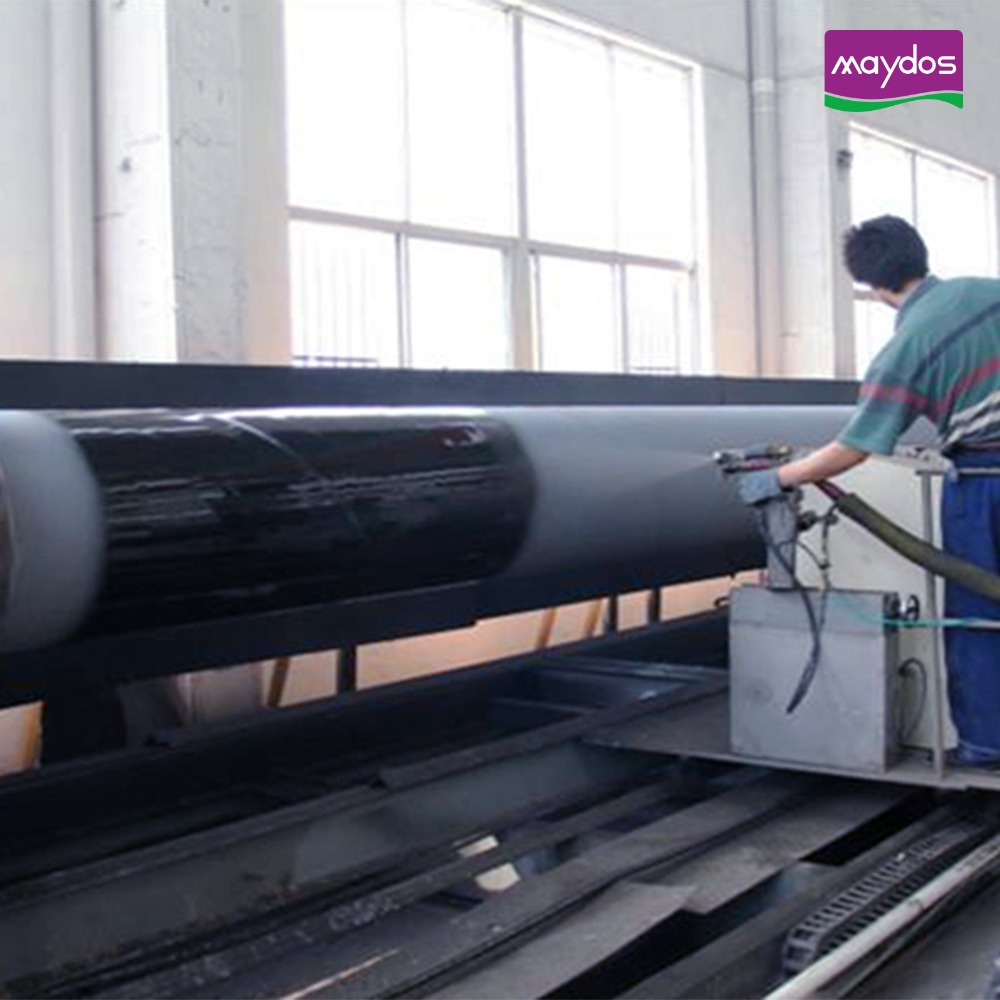
In terms of application, liquid coatings can be applied using brushes, rollers, or manual spray guns. However, in larger applications, automated spray guns and rotary bell devices are commonly used to increase efficiency, speed, consistency, and accuracy. In addition, electrostatics can also be incorporated into spray application processes to further boost transfer efficiency.
Liquid painting can also be dipped, which is useful for projects that are difficult to coat otherwise due to their shape or size. For dipping, workpieces are submerged into a bath of paint, which allows them to be coated more quickly and more accurately than would be possible with other methods.
When choosing a provider for your industrial paint finishing needs, be sure to ask about their turnaround times. You don’t want to choose a company that is slow, because this will delay your project and potentially impact your bottom line. Additionally, look for a provider that is experienced and has a good reputation.
Aside from the speed and quality of work, it’s also important to find a partner that offers environmentally friendly solutions. Liquid spray paints contain low levels of volatile organic compounds (VOCs), making them a more environmentally friendly choice than powder coatings. Additionally, they are HAPs-compliant and chrome-free, which ensures that your project meets all applicable environmental standards.
PPG Coatings Services has the capacity and experience to handle a wide range of liquid coating applications, including automotive steering gears, drive shafts, and hydraulic motors; truck wheels requiring special colors; and assembled machines. In addition, our extensive sandblasting and powder coating facilities enable us to meet the high-volume production requirements of many OEM customers.
Metal Finishing
Metal finishing involves a variety of procedures that are designed to make your metal product look its best and last longer. These include cleaning, buffing and adding a specific type of coat to the surface. These coatings protect metal products from rust and tarnishing while increasing their thickness, strength, durability and hardness. They also provide a layer of protection against chemicals, moisture and other environmental factors.
There are many different types of metal finishes, including electroplating, passivation, hot blackening and powder coating. Each one has its own advantages and disadvantages, but all of them work well for a wide range of products. Adding a specific type of finish to your product can improve its durability, appearance and solderability. Moreover, it can significantly reduce wear and tear. It can also maximize the strength, thickness and durability of your metal product and improve its electrical conductivity and corrosion resistance.
Adding a coat to your metal product can also hide blemishes and improve its appearance. This type of metal finishing is especially useful when a product needs to be visually appealing or is being shipped overseas. In addition, this process is inexpensive and works in a wide range of environments.
Another type of metal finishing is anodizing, which uses a chemical treatment to change the surface of aluminum. This method is ideal for applications that require a high level of corrosion resistance, aesthetic effects or increased electrical conductivity. Additionally, anodizing increases the abrasion resistance of your metal products.
Phosphate coating is another common form of metal finishing that is used to protect metals from corrosion. This technique is usually used as a pretreatment before painting or powder coating. Phosphate coating provides a good base for organic coatings and can help to extend their lifespan. It also prevents the formation of rust and other oxidation on the substrate.
Finally, abrasive blasting can be used to remove rust and oxidation from the surface of a metal product before applying a coating. This process can be performed by hand or by machine, and it can dramatically increase the effectiveness of other metal finishing techniques.
Painting
Painting is a common part of the coating process. It is a way to add aesthetic value and protect the surface from corrosion and abrasion. Paint and powder coatings are a key component to protecting and prolonging the lifespan of metal surfaces, including commercial and industrial facilities. It’s important to choose a painting contractor with the right surface preparation methods and modern coating technologies to ensure your facility is properly protected.
Whether used for aesthetics or protection, paint and coatings have played a long and varied role in the world’s history. The oldest documented use of paint came from cave dwellers, who used crude paints to create graphic representations on the walls of their homes. Over time, the industry grew into an essential part of our economy, with product innovations that help beautify and protect everything from buildings to industrial equipment to consumer goods.
Many of today’s paints and coatings are unnoticed, but they play immeasurably valuable roles in delivering high-quality foodstuffs, durable goods, housing, furniture and thousands of other products to market. For instance, Carboline’s corrosion-resistant coatings are utilized on bridges and oil platforms.
In the late 19th century, Sherwin Williams founded a paint company in Cleveland, Ohio. He had a background in bookkeeping and invested $2,000 that he saved from his job as a clerk in a dry goods store. He began to make linseed oil and other oils into paint and varnish. His company was a success, and by the 1930s, Sherwin had built one of the largest companies in the country.
The first step in automating the coating line was to implement a robot for sealant and undercoating applications. However, these robots proved to be more complicated than expected, requiring specialized engineering and extensive programming. As a result, the project was moved to EG’s special development team working on coating projects.
After a thorough review of the specifications, a new system was designed to increase the efficiency of the body-painting process. This system, known as ED Coating (Electro-deposition), involved submerging the component in a water-based solution that contained paint emulsions and applying it to the metal surface. The component is grounded, while the operator sprays it with a negative charge that allows the paint to adhere.